A survey at the end of a conversation can tell you whether the customer was satisfied. But the chat also leaves other signals before that answer arrives.
Wait times, abandoned conversations, cases that get reopened, and even the tone of the messages help you understand how the experience went. The CSAT survey is still valid. The difference is not asking the survey to explain, on its own, everything that happened during the interaction.

What metrics complement customer satisfaction measurement?
In messaging, part of the experience can be observed in how the conversation actually unfolds. These four signals help complete the picture.
Human agent performance
First response time and time between messages show how long the customer had to wait. The volume of resolved conversations helps you understand your team’s capacity. But speed and volume shouldn’t be read in isolation: replying fast does little good if the customer has to explain their problem again or if the quality of the resolution drops.
That’s why it pays to cross-reference operational indicators with customer perception. That way, you can spot whether an agent needs to pick up speed, whether demand is poorly distributed, or whether the problem lies in the process rather than the person.
Conversational flow completion and abandonment
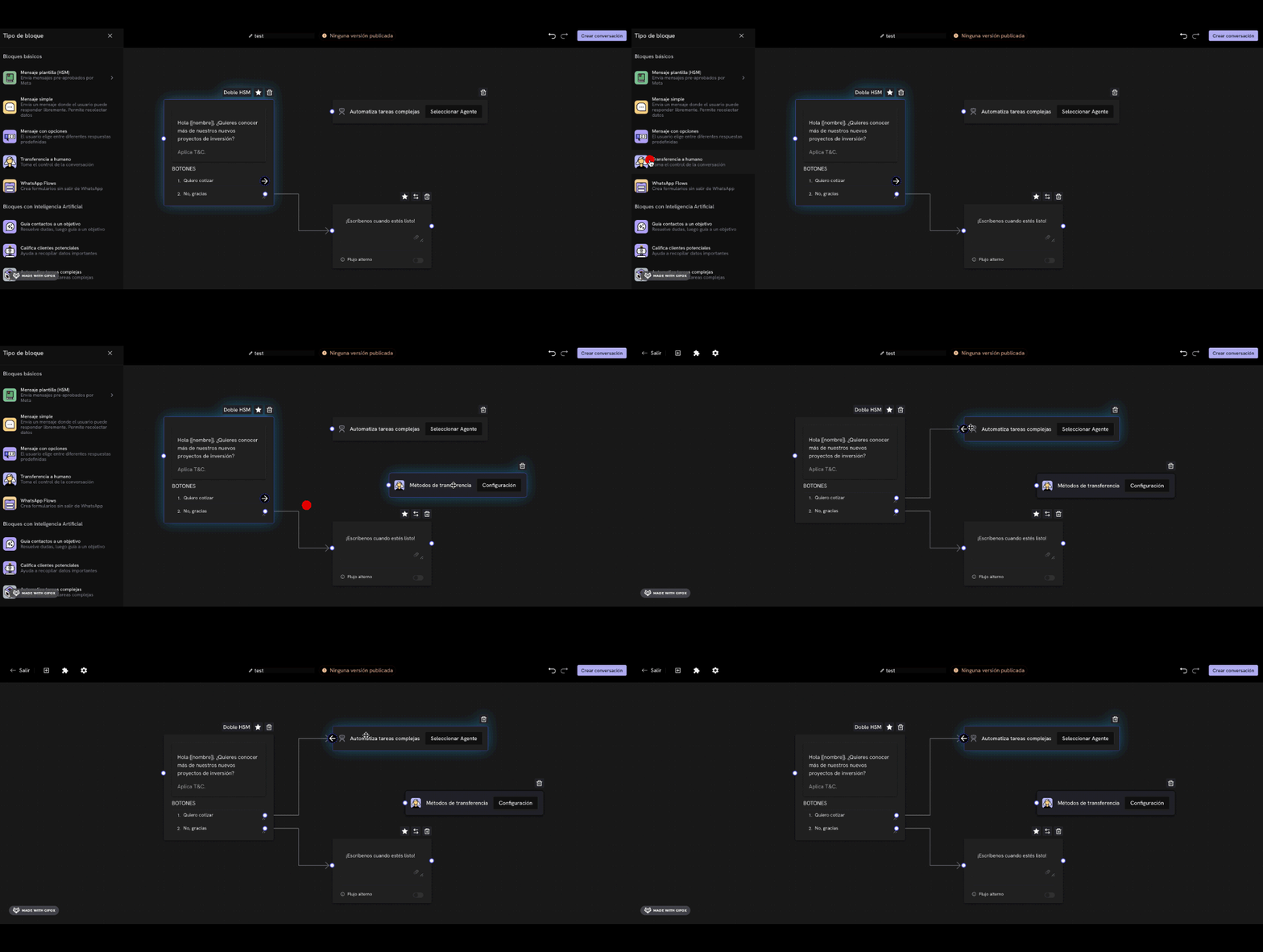
An automated flow tells a story too. If people make it to the end, the journey is probably doing its job. If they always drop off at the same step, that’s a signal worth investigating. Learn more about how to create your own flow in Treble.
The drop-off point can reveal a confusing question, too many steps, or an action that takes more effort than expected. Instead of asking the customer what went wrong, the funnel itself shows where friction appears.
Sentiment analysis on conversations
Sentiment analysis examines the language used in messages to identify signals of positive, negative, or neutral tone. Our AI agent, TOM, has this capability and can analyze the sentiment present in conversations. It does not replace human evaluation or a survey, but it allows you to identify patterns across large volumes of conversations without requiring an additional response from the customer.
Its greatest value lies in context. A drop in CSAT accompanied by more messages with negative signals tells a different story than an isolated dip in the survey.
Case reopen rate
Closing a conversation doesn’t always mean resolving it. If the customer writes back about the same issue, the reopening may indicate that the first solution was incomplete, unclear, or didn’t address the root cause of the problem.
Tracking this signal helps you tell operational closure apart from real resolution. It also helps identify topics that generate rework and affect both the customer experience and team efficiency.
Surveys and behavior: a more complete picture
The question shouldn’t be whether to use surveys or behavioral data. It’s worth looking at both.
CSAT provides an explicit answer: the customer tells you how they perceived the service. Behavioral metrics show what happened along the journey, even when the person decides not to answer a survey.
When these signals are scattered, analysis becomes harder. A multi-agent platform with an admin panel lets you centralize operations and track, in a single environment, performance by agent, flow journeys, and drop-off points. And CSAT surveys can remain part of that picture.
With treble.ai, that’s exactly the idea: not choosing between surveys and behavior, but bringing complementary signals together to better understand the experience and make decisions with more context.
Better measurement starts with looking at the whole conversation
Good satisfaction measurement doesn’t depend on a single score. It depends on connecting what the customer says with what they do during the conversation.
CSAT, response times, flow abandonment, sentiment analysis, and case reopening answer different questions. Together, these signals help uncover friction that an isolated metric could hide.
Discover how Treble centralizes the management and visibility of your conversations so you can analyze the experience with more context.
Continue reading “Every Reply Starts to Have a Price: What’s Changing on WhatsApp in October”