When a bot enters a support operation, one of the first questions the team usually asks is what will happen to their jobs. The concern is understandable. If automation is presented only as a way to do more with fewer people, it’s easy for it to become a threat before it becomes a tool.
Integrating AI shouldn’t mean choosing between people or automation. The goal is to decide what each does best and design an operation where both complement each other.
What should the bot do, and what should a person keep doing?
A bot works especially well when the task is repetitive, follows clear rules, or needs to run consistently. It can collect information, answer frequently asked questions, classify a conversation, or guide the customer through the first steps of a process.
The human agent brings another layer: they interpret context, handle exceptions, negotiate, make decisions, and support conversations that call for empathy or judgment.
The split doesn’t have to be rigid. The bot can start a conversation and prepare the context before handing it off to an agent. The agent can resolve the case and feed new learnings about what’s worth automating next.
How to train your customer support team to work with a bot
Training shouldn’t start by explaining buttons. First, the team needs to understand what role automation will play within the operation.
1. Explain the goal before teaching the tool
Define the problem you want to solve. It could be reducing repetitive tasks, organizing conversations better, or giving agents more context before they take over a case. When the purpose is clear, the tool stops looking like a replacement and starts having a concrete function.
2. Define when each side steps in
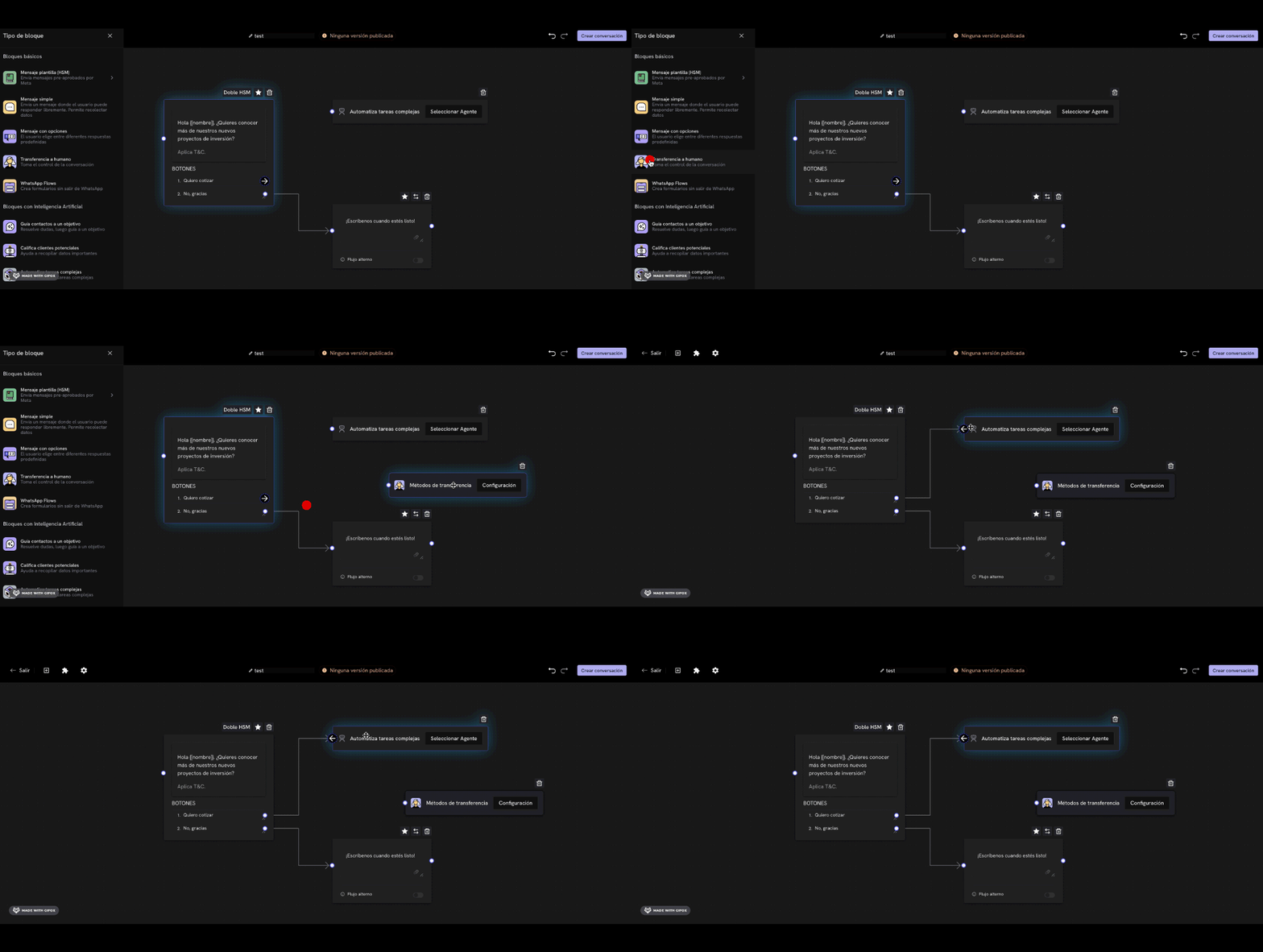
Document what the bot can resolve, when it should transfer a conversation, and what information the agent needs to receive. A good handoff keeps the customer from having to start over and helps the human team join the conversation with context.
3. Train with real conversations
The best examples are in your own operation. Review conversations to identify where automation works well, where it creates friction, and when human intervention improves the outcome. This makes training practical and makes continuous adjustments easier.
4. Include the team in improving the bot
People who handle customers every day spot new questions, exceptions, and friction points before anyone else. Creating a channel for agents to report these cases turns the team into an active part of how the automation evolves. Discover the Boston Medical Group success story.
5. Measure results as a single operation
If the bot and agents are part of the same experience, analyzing them in isolation only tells part of the story. Look at the full journey: where automation resolves, where the handoff happens, and what happens after the agent takes over the conversation.
Automation also changes human work
When repetitive tasks move to an automated flow, the agent’s role changes. Their value shifts away from repeating answers and toward resolving situations that call for judgment, context, and conversational skill.
That also requires training. The team needs to learn how to receive conversations started by a bot, interpret the available history, and continue the support without breaking the customer’s experience.
That’s why implementing AI isn’t just a technology project. It’s also an operations and people project.
AI and human agents can be part of the same operation
Treble’s own structure starts from that coexistence. app.treble.ai brings together the automation and AI capabilities, while sales.treble.ai is geared toward the work of human agents and sales teams.
The logic isn’t to set one section against the other. It’s to let automation and human support take part in the same strategy, each at the moments where it adds the most value.
For the team, this helps change the conversation about AI. The question stops being “what will the bot replace?” and becomes “what can it take on so I can step in better?”
The best team doesn’t compete with automation
A bot doesn’t need to imitate an agent to be useful, and an agent doesn’t need to compete with a bot’s speed. An efficient operation defines responsibilities, creates good handoffs, and learns from conversations.
When the team understands this logic from the start, adoption no longer depends on technology alone. Automation and people begin to work as parts of the same experience.
See how Treble connects automation, AI, and human teams to build smoother conversations from start to finish.